Your Good Name Please
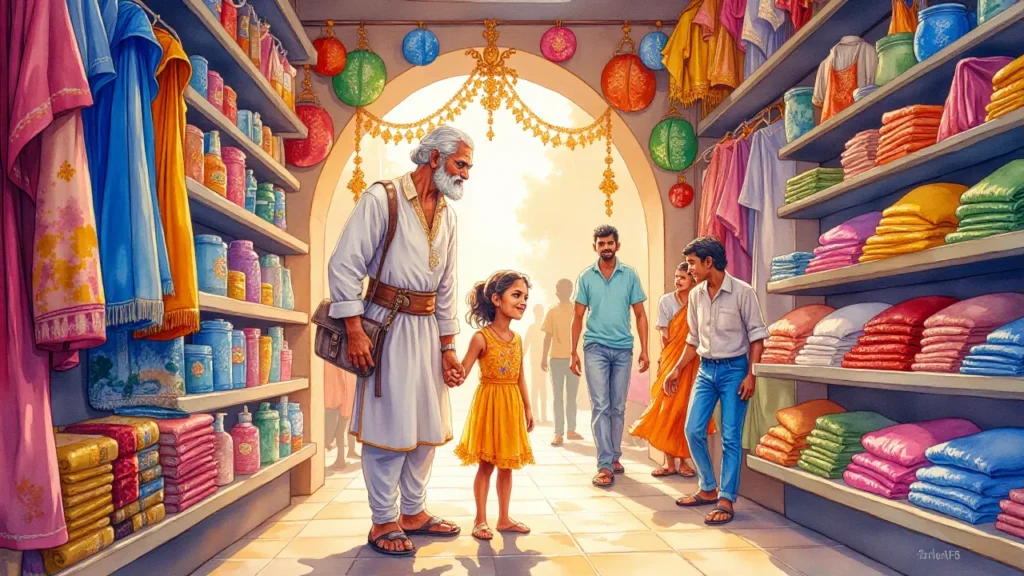
Grandpa Chowdhury and Reena entered the departmental store to buy a few items. The store manager, who knew Professor Chowdhury, greeted them warmly.
“What is your good name, please?” the beaming manager asked Reena.
“Good name? Well…” Reena hesitated, unsure how to respond. Luckily, the professor quickly introduced her to the manager by simply stating her name, “Reena.”
“Please take your seat,” said the polite manager. “Are you drinking coffee?”
Reena was obviously surprised. She looked around to see if there was a cup of coffee nearby, which the gentleman must have mistaken her for drinking. There was none.
“Of course she drinks coffee, but I don’t think she would like to drink anything now,” Grandpa replied, trying to ease the situation.
Once they boarded their car, Reena asked Professor Chowdhury, “Grandpa, did that gentleman think I could have a bad name too?”
Grandpa laughed and explained, “In some Indian languages, they ask one’s ‘Shur nari.’ ‘Shur,’ literally auspicious, is translated as good. This is a part of what is known as Indian English. For example, the manager asked us to take a seat, while an Englishman would say, ‘Please sit down.’ In India, we might also say, ‘He is not in his seat,’ when the correct form is, ‘He is not here’ or ‘He is not in the office.’ Additionally, ‘to take coffee’ is not quite correct; it should be ‘to drink coffee.’”
“And why did the gentleman think that I was taking coffee when there was no coffee at all?” Reena inquired, still puzzled.
“That was his way of asking whether you drink coffee or not. What he wanted to know was whether you were in the habit of drinking coffee!” Grandpa clarified.
“I see. Thanks, Grandpa!” Reena responded with newfound understanding.