Fruit of Labor
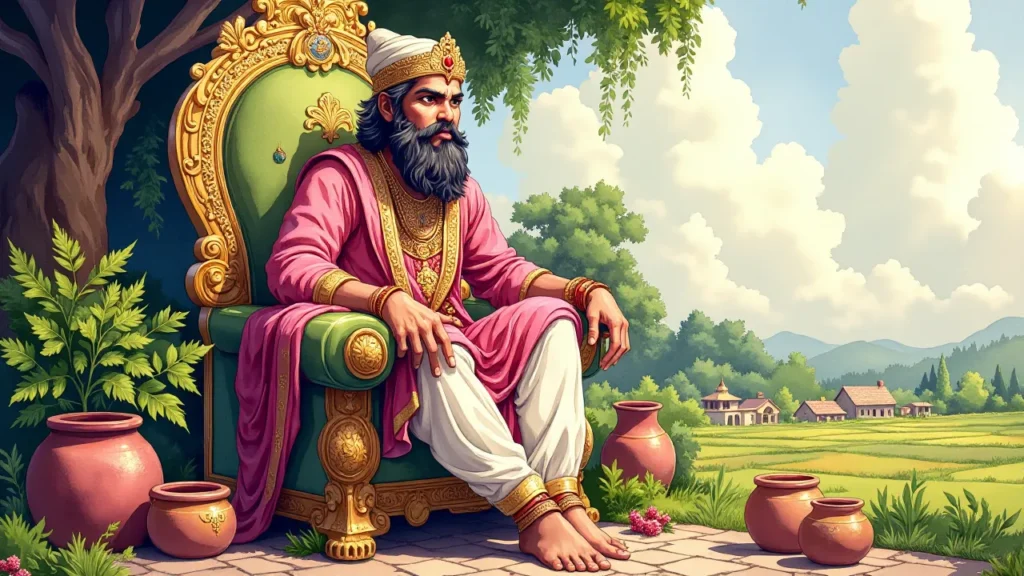
In Yilge, there lived a king who was known for his laziness. Every day, he sent his wife out to beg. The moment he had enough money for the day, he would retreat to his chambers. He often said, “I am no longer pleased with this life of ease. Let me go out and earn my own living; it could last for my entire reign!” His wife was happy to hear this determination.
The king pondered his situation, questioning the morality of his inherited wealth. “What was the necessity of telling me this in private?” the Brahmin remarked. “Earning cannot be called labor unless you toil for it. What you give me should be the money that you have earned. At least one of us should have labored for these funds.” The king became thoughtful, realizing he had earned nothing on his own.
The next morning, the king donned the clothes of a laborer and sought work. A potter promised him four rupees if he would mix clay with his feet. The king agreed and began working diligently. However, the potter soon declared, “You are no good at this work. Better take the four rupees and go away; you are useless!” Feeling dejected, the king accepted the payment and returned home.
In the evening, he handed the four rupees to the Brahmin. The Brahmin’s wife was at home, eagerly anticipating a better fortune. When she saw only four rupees, she was upset, throwing the coins into the backyard. The next day, the Brahmin discovered four unknown plants growing where the coins had landed. “My lord! These are the fruits of your labor! The four trees grew out of the four coins you gave me,” he exclaimed. “We must put the wealth they give to good use!”