The Miracle-man and His Son
The Eerie Night
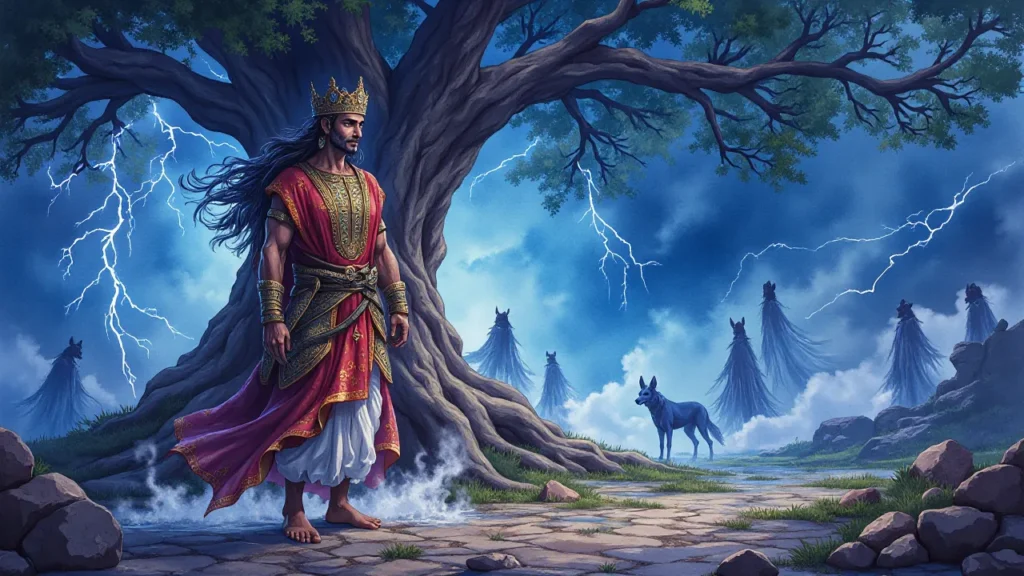
It was a strange night, filled with an unsettling atmosphere. Rain fell intermittently, and at intervals, the roaring thunder mingled with the haunting moans of jackals and hyenas, alongside the eerie laughter of spirits. Flashes of lightning illuminated fearful faces. Yet, King Vikram remained undeterred. He climbed the ancient tree once more and retrieved the corpse. However, as soon as he began crossing the desolate cremation ground with the corpse draped over his shoulder, the vampire possessing the body spoke, “O King, I cannot fathom what kind of supernatural power you seek that requires such effort. But I assure you, acquiring such power does not guarantee your welfare. Allow me to share an instance that may offer you some insight.”
The Tale of Shur Sharma
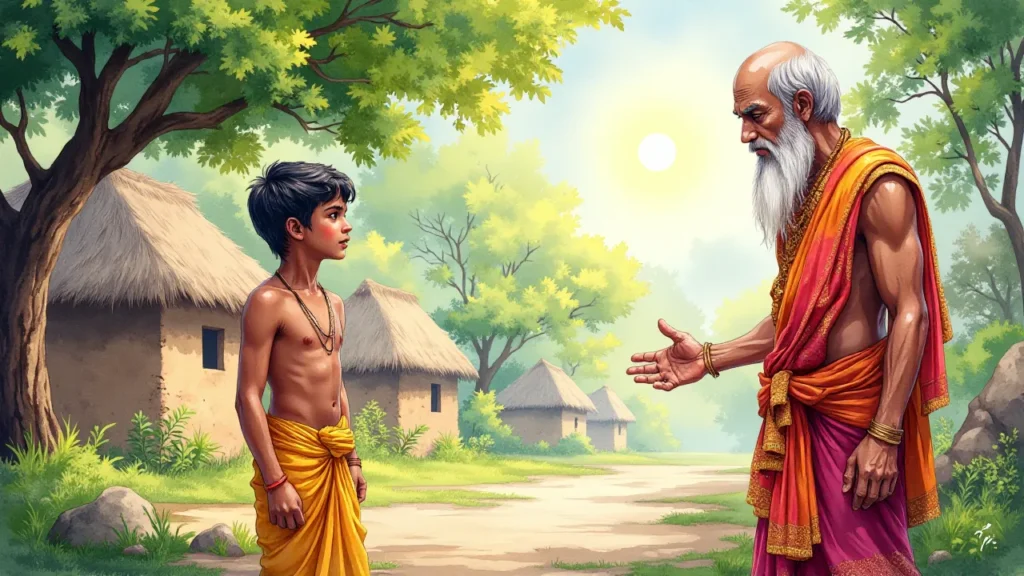
The vampire continued: In Vaishali lived a Brahmin named Shur Sharma. He was a priest by profession and quite well-off, yet he was more learned than any ordinary priest. His extensive knowledge brought him no additional benefits, and he felt envy towards those scholars who were honored by the king. Shur Sharma had only one child, a son named Krishna Sharma, who successfully completed his studies in the Vedic school and began assisting his father with priestly duties. Shur Sharma recognized his son’s capabilities and felt comfortable leaving him home alone for a few days.
“I am going on a pilgrimage,” he told Krishna, and departed from the town. He journeyed into the Himalayan region in search of a Yogi who had mastered supernatural powers. Fortune smiled upon him, and he soon met such a Yogi. He served the Yogi diligently for several months.
The Quest for Power
One day, the Yogi remarked, “Brahmin, you left your family behind; I doubt you lost all interest in worldly affairs. I sense you are here to fulfill a desire. Would you like me to teach you a secret to satisfy your wish?”
“O great soul, I shall not conceal anything from you. I desire fame and wealth. Please bestow upon me the secret that will lead to these riches,” Shur Sharma replied, hands folded in reverence.
“Brahmin, it would have been praiseworthy for you to rise above such fleeting desires. Since you cling to them, I shall oblige. I can teach you a hymn that can summon rain or halt it at will. This will bring you both fame and wealth. But heed my warning—do not let greed blind you to your circumstances,” warned the Yogi.
The Consequences of Greed
Elated, Shur Sharma returned to Vaishali and discovered that his homeland was suffering from a severe drought. The king had performed numerous rituals, but none succeeded. A proclamation was made: anyone who could bring rain would be richly rewarded.
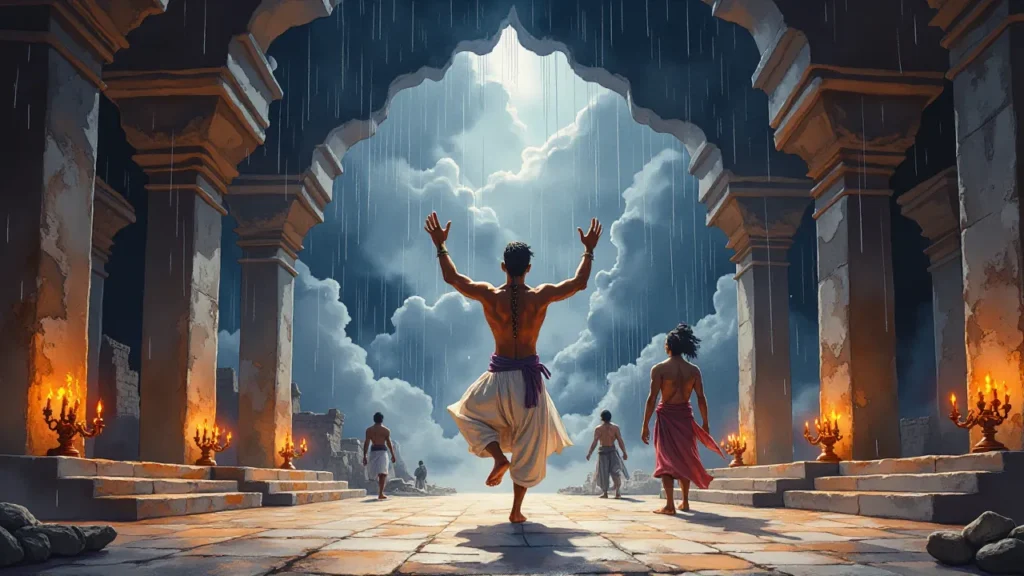
“My son,” Shur Sharma told Krishna, “I possess a hymn that can summon rain whenever I wish. I will teach it to you, in case I forget.” He instructed Krishna on how to face north, stand on one leg, and recite the hymn thrice for both sending and stopping the rain.
“Father,” Krishna implored, “why don’t you perform the rite facing north right now? Drought is ruining crops and threatening lives!”
“Do not speak foolishly! If I summon the rain here, how will the king know it is my power? I endured great effort to learn this hymn for nothing! The king must witness the miracle to reward me,” said Shur Sharma.
With that, he set off to meet the king, confidently declaring, “The rains will come at my command!” The king, skeptical but intrigued, promised a reward of ten thousand gold coins if he succeeded.
“Watch what I can do within an hour,” Shur Sharma replied. He went to a deserted temple outside the town, took a dip in the water, and made unnecessary gestures and postures. While the king’s emissary monitored him closely, he stood on one leg facing north and recited the hymn thrice. Dark clouds gathered above, and moments later, heavy rain poured down.
However, in the deserted temple, excitement turned to horror when Shur Sharma was found dead, the proceeds from his miracle stolen by bandits who lurked in that lonely place. The king, distraught and uncertain of how to stop the rain, sought guidance from the chief minister.
When the chief minister approached Krishna Sharma about the tragedy, Krishna stood silent in disbelief. The minister expressed sorrow for the loss and posed the question, “How can we stop the rain?”
“What can we do but pray to God?” Krishna said, and he faced north, standing on one leg, and recited the hymn thrice. The rain ceased immediately, though no one knew of Krishna’s actions.
The vampire turned to King Vikram indignantly. “How could Krishna Sharma, the son of such a clever man, act so foolishly? Why didn’t he prove his knowledge of the hymn before the minister and claim his reward? Was it fear of assassination that kept him silent? Answer me, or your head shall roll!”
King Vikram replied, “Far from foolish, Krishna Sharma was wise. He urged his father to bring down the rain without craving a reward. His father foolishly prioritized wealth over safety. Mastery of power was meaningless without self-control. Krishna sought neither fame nor wealth. His detachment kept his skill a secret.”
As soon as King Vikram finished, the vampire vanished, leaving only the corpse behind.