A Poet’s Prophecy

A Poet’s Prophecy
It was an evening in Paris—specifically, Paris in the 19th century—when crowds began to flock into a music hall. The renowned composer Vincenzo Bellini was set to perform for them.
“Hello, my dear friend!” Bellini exclaimed as he rushed toward a gentleman standing at the door. His enthusiasm was evident, as the gentleman was not only his friend but also the celebrated German poet Heinrich Heine (1797-1856), one of the most popular poets of his time.
A Chilling Omen
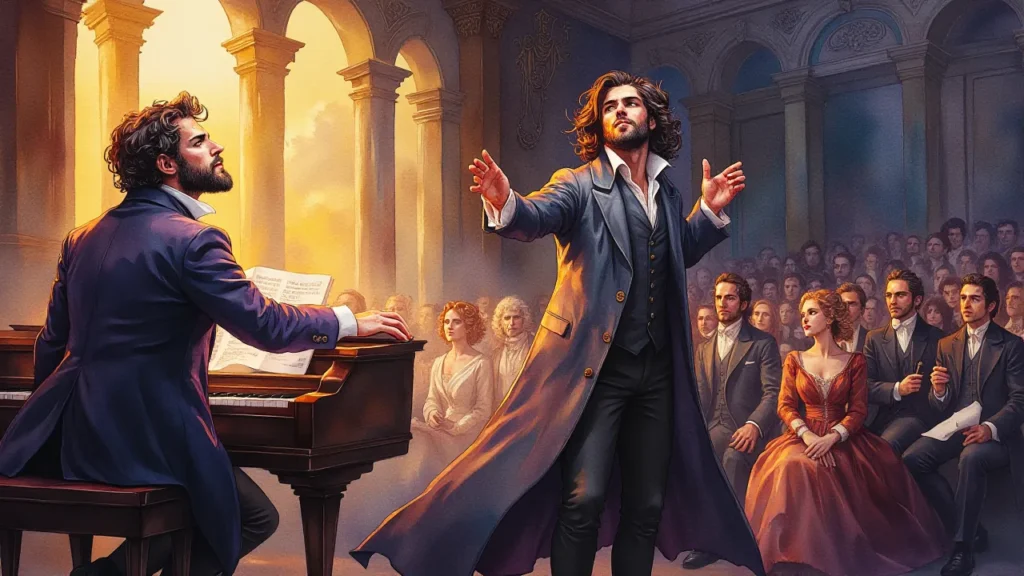
The two friends entered the hall, where Bellini took to the platform while Heine settled into a seat in the front row. Bellini began to play on his piano, captivating the audience with his talent. The listeners remained silent and enthralled, with only hearty applause interjecting between his compositions.
Suddenly, the audience noticed someone approaching Bellini from behind. As the figure stepped into the light, they recognized him as the famous poet Heinrich Heine. It seemed he wanted to congratulate Bellini or perhaps address the audience—such was the impression of the onlookers.
A Dark Revelation
But instead, Heine leaned over Bellini, grasped the musician’s moving fingers, and brought the music to an abrupt halt. Bewildered, Bellini looked up, and the audience sat in stunned silence.
Heine’s voice, though not loud, was clear: “My dear friend, get ready. There is not much time left. You are to die.” Bellini let out a low shriek of horror.
“Indeed, my friend,” Heine continued softly. “Remember those great talents who passed away young. You are destined to be one of them. What a pity!” The audience began to murmur, and Bellini, now agitated, swiftly left the hall.
The Prophecy Unfolds
Tragically, Bellini died just three days later. What compelled Heinrich Heine to deliver such a strange prophecy? Was he himself in that moment, or was he in a trance, possessed by a spirit that could foresee Bellini’s fate?